
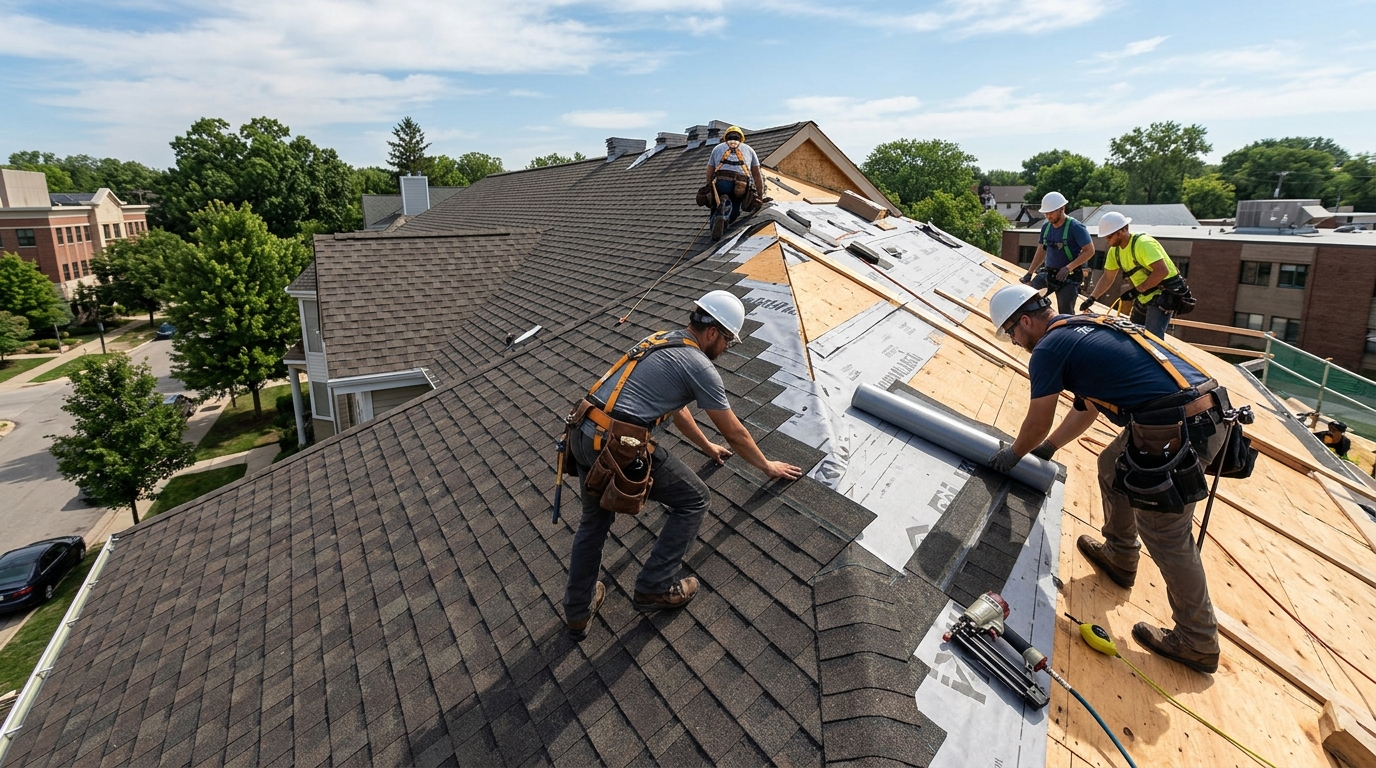
The duration of a roof replacement reveals more than just logistics. It exposes critical windows of asset vulnerability and strategic decision points for long-term capital preservation.
The duration of a roof installation is often viewed as a logistical constraint. This perspective misses its strategic aperture. This timeline is not merely about labor, but a critical window of asset vulnerability, demanding a calculated assessment of risk and long-term capital deployment.

For property owners, the two-to-three-week average for a complete project, encompassing permits and material acquisition, highlights an elevated exposure. The actual shingle installation, a fraction of this, is the final phase of risk mitigation. Leverage lies in managing the entire sequence, not just visible construction.
Variables like architectural complexity and unpredictable weather directly extend this exposure. These are not minor inconveniences, but forces shifting the cost-benefit analysis of proactive maintenance. Optimizing timelines and mitigating risks requires a calibrated approach. Understanding asset maintenance costs is a strategic imperative. For those seeking to optimize long-term capital and secure an edge in managing property expenditures, a deeper insight into potential savings mechanisms is crucial. Check it out.

Compliance with regulatory frameworks, specifically local permitting and building codes, is non-negotiable. Bypassing these steps introduces exponential risk, guaranteeing delays and increased costs, undermining any perceived short-term gain.
Monitoring key milestones provides critical leverage. Each stage, from initial inspection to permit approval, represents a control gate. Proactive oversight prevents cascading delays. Engaging professional expertise is strategic risk transference, not mere convenience. This secures the asset's integrity, operational continuity, and enduring value for decades.
Former war correspondent turned geopolitical analyst with 18 years covering global power shifts, economic warfare, intelligence networks, and institutional decay. Adrian writes like someone who has seen how decisions actually get made — and who makes sure readers understand the stakes.

Mar 26, 2026

Mar 26, 2026

Mar 20, 2026