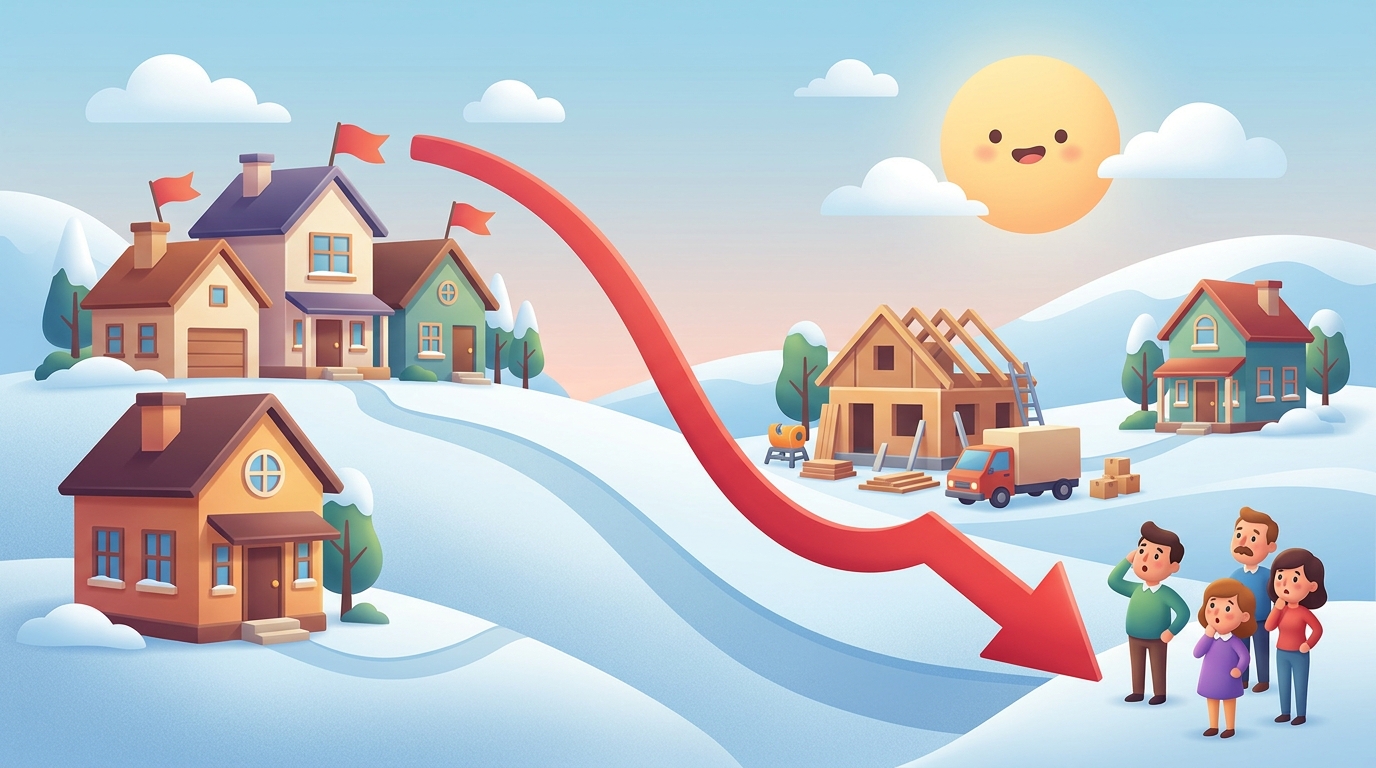

New home sales in the U.S. Have dropped to a near three-and-a-half-year low, reflecting deeper challenges in the housing market driven by weather, economic pressures, and geopolitical tensions.
Recent data from the Commerce Department reveals a significant drop in U.S. New single-family home sales, hitting their lowest point in nearly three and a half years. In January, sales fell by 17.6%, reaching a seasonally adjusted annual rate of 587,000 units. This decline, exacerbated by severe winter weather, signals more than just seasonal fluctuations; it reflects deeper, systemic challenges within the housing market.
The revised figures for December reveal a similar trend, with sales adjusted down to 712,000 units from an earlier estimate of 745,000. Such a dramatic shift indicates that even the most optimistic forecasts underestimated the market's fragility. All four regions of the country experienced declines, underscoring the pervasive nature of this downturn.

While harsh snowstorms and frigid temperatures impacted buyers' ability to view properties, attributing the decline solely to weather ignores the broader context. The government shutdown last year has left the Census Bureau catching up, but the underlying factors driving the housing market remain unchanged. Despite a temporary decrease in mortgage rates, the recent increase in rates as geopolitical tensions escalate further complicates the landscape.
In this environment, prospective buyers may benefit from comparing various loan options to navigate the shifting tides of the market. A robust online marketplace can help users assess different offers and secure favorable terms for home purchases or refinancing. Check it out.

Even with new housing inventory rising to 476,000 units in January, the sales pace suggests a grim outlook; it would take nearly 9.7 months to clear current inventory. This extended timeline reflects not just the immediate slowdown but a potential shift in long-term demand dynamics. Elevated construction costs, high inventory levels, and a tightening labor market compound the challenges for single-family home construction.
As we look ahead, the implications of these trends are profound. The housing market may face prolonged stagnation unless significant changes occur in economic conditions or policy frameworks. Understanding these developments now is crucial for calibrating future expectations and navigating the complexities of home ownership in the years to come.
Former war correspondent turned geopolitical analyst with 18 years covering global power shifts, economic warfare, intelligence networks, and institutional decay. Adrian writes like someone who has seen how decisions actually get made — and who makes sure readers understand the stakes.

Mar 26, 2026

Mar 26, 2026

Mar 26, 2026